
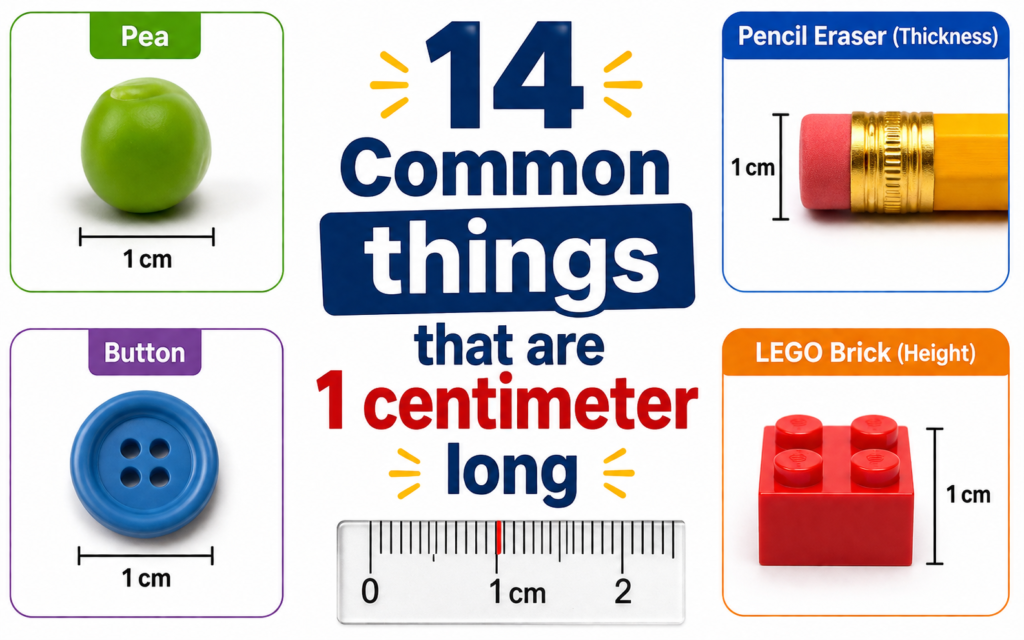
Have you ever wondered, how long is 1 centimeter? Although it is a very small unit of measurement, a centimeter is used every day in schools, offices, homes, construction projects, and even healthcare. Since it is part of the metric system, it provides a simple and accurate way to measure small objects. Understanding the size of one centimeter becomes much easier when you compare it with familiar items you already see around you.
Many people struggle to visualize a centimeter because it is too small to estimate by eye. Fortunately, using common household objects makes it easier to understand its actual size. In this guide, you’ll learn exactly how long 1 centimeter is, discover 14 everyday items that are approximately 1 centimeter in size, compare them quickly, and find answers to frequently asked questions. By the end of this article, you’ll have a clear mental picture of this useful measurement.
How Long Is 1 Centimeter?
If you’re asking how long is 1 centimeter, the simple answer is that it equals 10 millimeters, 0.3937 inches, or about 0.01 meters. A centimeter is one-hundredth of a meter, making it one of the most commonly used metric measurements for everyday objects. Unlike larger units such as meters or feet, centimeters are perfect for measuring items that fit comfortably in your hand, including jewelry, stationery, fruits, electronic accessories, and craft materials.
The easiest way to imagine one centimeter is by looking at the markings on a standard metric ruler. The distance between any two numbered centimeter marks equals exactly one centimeter. Because it is neither too large nor too small, this unit helps people measure objects accurately without complicated calculations. Teachers, engineers, designers, doctors, and DIY enthusiasts rely on centimeters because they provide precise measurements while remaining easy to understand. Once you recognize a few everyday objects that measure about one centimeter, estimating similar sizes becomes much more natural.
Quick Comparison of 1 Centimeter Examples
The table below gives a fast overview of common items that are about one centimeter in one dimension.
| Everyday Item | Approximate 1 cm Measurement |
|---|---|
| Fingernail width | Around 1 cm |
| Pea | About 1 cm diameter |
| Blueberry | Around 1 cm diameter |
| Pencil eraser thickness | About 1 cm |
| Small marble | Around 1 cm |
| Dice edge (small) | Approximately 1 cm |
| Shirt button | About 1 cm diameter |
| LEGO brick height | Close to 1 cm |
| Peanut | Roughly 1 cm wide |
| Corn kernel length | Around 1 cm |
| Ladybug length | About 1 cm |
| Cherry stem length | Around 1 cm |
| Standard staple width | Close to 1 cm |
| Pinky fingernail width | Around 1 cm |
1. The Width of an Adult Fingernail
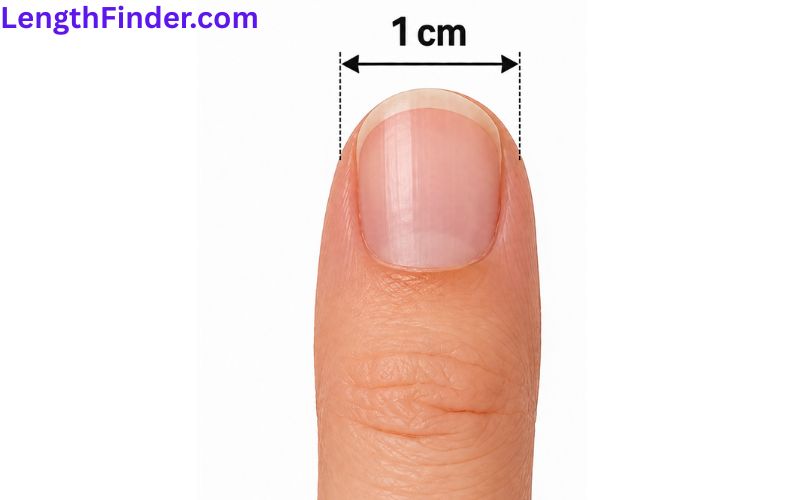
An adult’s index finger fingernail is often close to one centimeter wide, making it one of the easiest references for understanding this measurement. While nail sizes vary from person to person, many adults have fingernails that measure roughly one centimeter across. This makes your own hand a convenient measuring tool whenever you don’t have a ruler nearby. If you’re trying to estimate the size of a small object, comparing it with your fingernail can provide a quick approximation. Although it is not perfectly accurate for precise work, it is surprisingly useful for everyday estimates and helps you visualize exactly how long 1 centimeter looks in real life.
2. A Green Pea
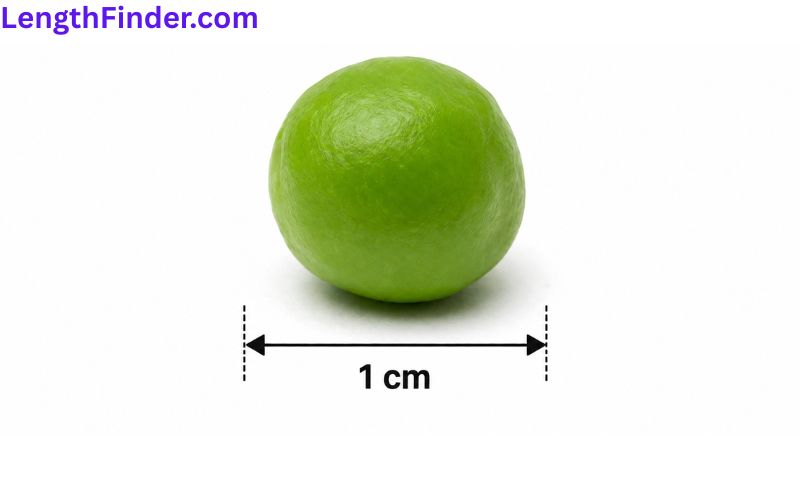
A fresh green pea usually measures about one centimeter in diameter. Because peas are nearly round, they provide an excellent visual example of this small measurement. Whether you are preparing vegetables in the kitchen or eating a meal, you can easily observe how compact one centimeter really is. Since peas are found in households worldwide, they make one of the most familiar examples for children learning measurements. Their consistent size also helps teachers explain metric units during classroom activities. Looking at a single pea quickly demonstrates that one centimeter is much smaller than many people first imagine.
3. A Blueberry
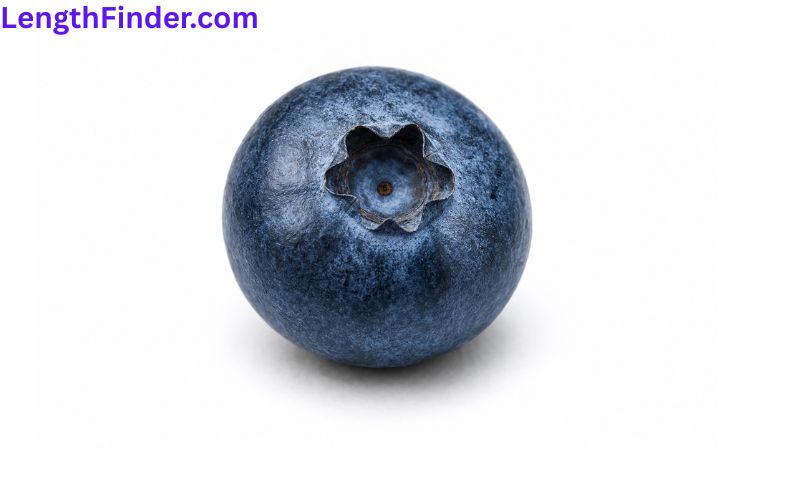
Most medium-sized blueberries are approximately one centimeter across. Although some varieties are slightly larger or smaller, they remain one of the best real-life examples of this measurement. Blueberries are easy to picture because they are round, colorful, and commonly found in grocery stores. Comparing an object with a blueberry allows you to estimate whether it is close to one centimeter in width. Their consistent appearance makes them especially useful when introducing the metric system to young learners. Next time you enjoy blueberries, you’ll have a practical reminder of what one centimeter actually looks like.
4. Pencil Eraser Thickness
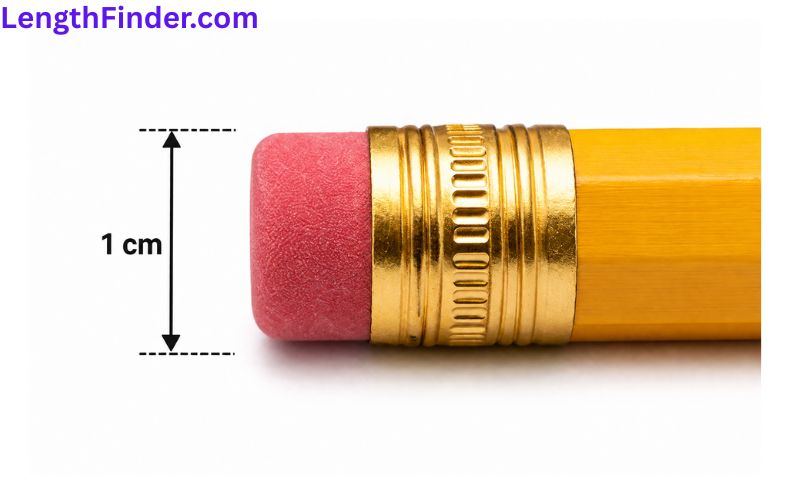
The eraser attached to many standard wooden pencils is often close to one centimeter thick. While the length of the eraser may vary depending on the manufacturer, its diameter provides a helpful size reference. Students, teachers, artists, and office workers handle pencils regularly, making this one of the easiest objects to remember. Whenever you hold a pencil, notice the eraser’s thickness to develop a better understanding of one centimeter. This everyday comparison is especially useful in classrooms where rulers may not always be available during quick estimation exercises.
5. A Small Marble
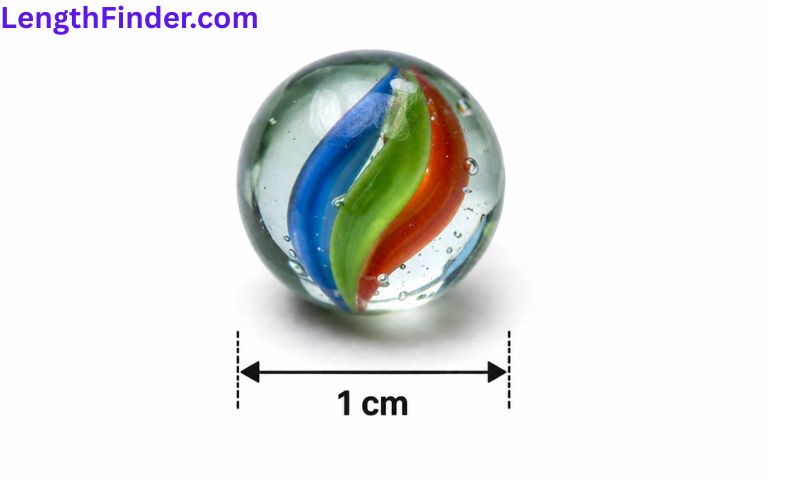
Many toy marbles measure around one centimeter in diameter. Marbles have been popular for generations and provide an excellent three-dimensional example of this measurement. Because they are smooth and perfectly round, their size is easy to compare with other objects. Children often use marbles during games, while collectors appreciate their colorful designs. Looking at a marble helps people understand that one centimeter represents a relatively small distance. It also demonstrates how the metric system is useful for measuring tiny objects accurately without using fractions.
6. The Edge of a Small Dice
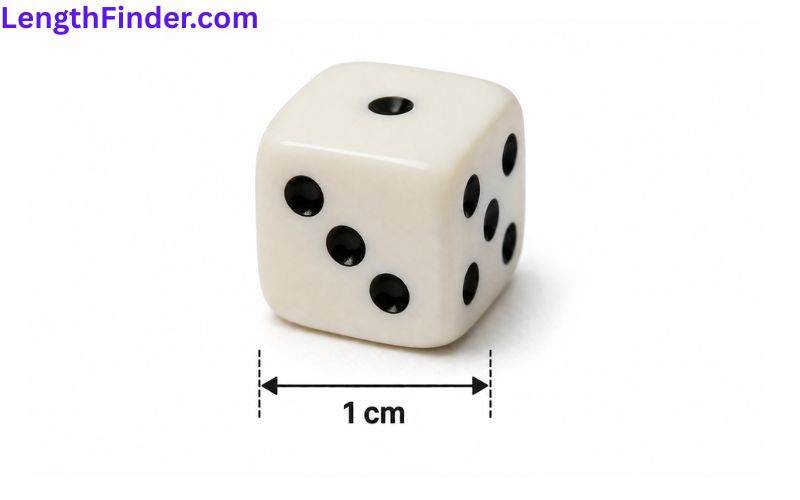
Some miniature dice used in travel games or board games have edges measuring approximately one centimeter. Their square shape makes them especially useful when learning about length because each side is nearly equal. Unlike round objects, dice clearly show straight-line measurements, making comparisons easier. Board game enthusiasts often encounter these miniature dice without realizing they are excellent examples of one centimeter. Their compact size also highlights why centimeters are preferred over inches when measuring very small gaming accessories and hobby supplies.
7. A Shirt Button
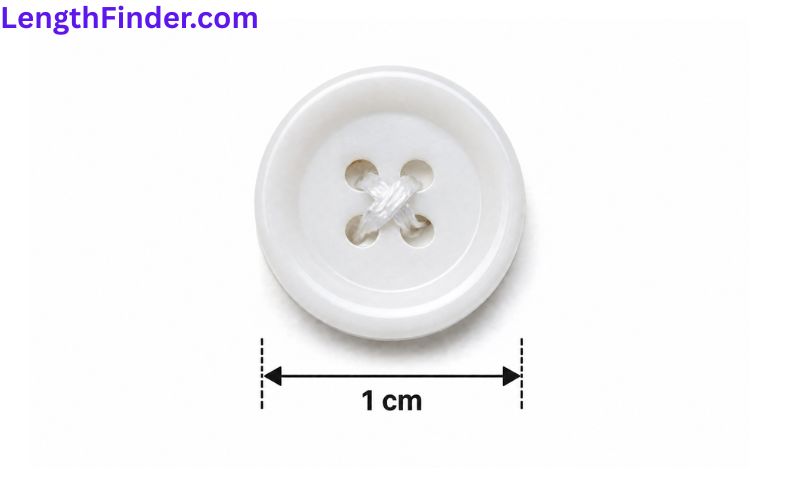
Many standard shirt buttons have a diameter close to one centimeter. Although decorative buttons may be much larger, everyday dress shirts often use buttons within this size range. Because almost everyone owns shirts, this becomes another convenient reference point for understanding one centimeter. Observing a shirt button helps visualize how small this measurement is while showing its practical use in clothing design. Fashion designers and tailors regularly use centimeters because they allow precise measurements for garments, ensuring buttons, seams, and accessories fit correctly.
8. LEGO Brick Height
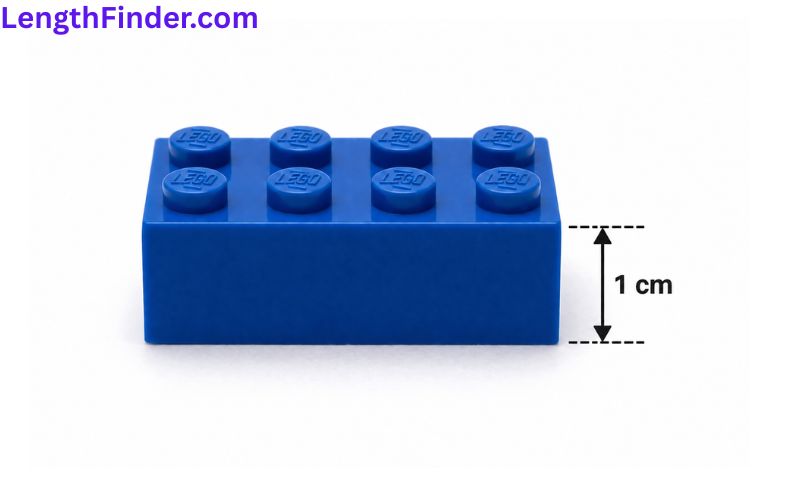
The height of a standard LEGO brick is just under one centimeter, making it another excellent comparison. LEGO bricks are designed with incredible precision so they fit together perfectly every time. Their consistent manufacturing standards make them reliable examples when explaining metric measurements. Children who enjoy building with LEGO naturally become familiar with this size without even realizing it. Comparing one brick’s height to other objects helps create a strong mental image of one centimeter while demonstrating how accurate measurements are essential in engineering and toy manufacturing.
9. A Peanut
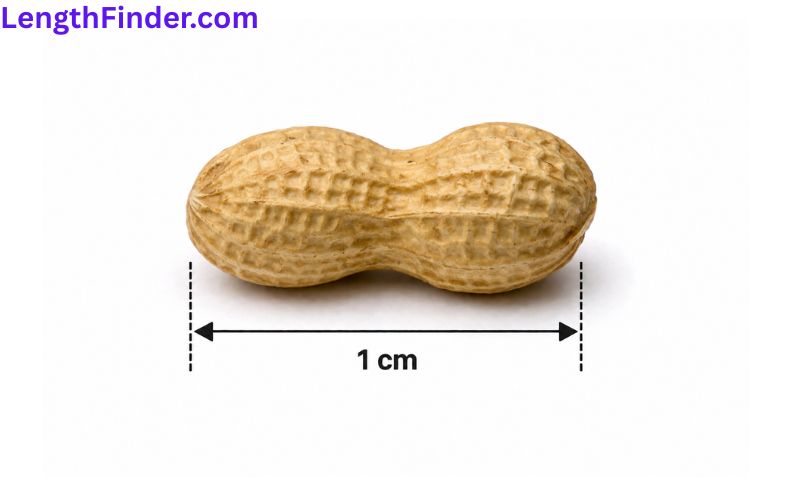
A shelled peanut is roughly one centimeter wide at its thickest point. Although peanuts vary slightly in size, many fit this measurement surprisingly well. Since peanuts are common snacks around the world, they provide another easy-to-recognize example. Their irregular shape also teaches an important lesson: everyday objects rarely match measurements perfectly, but they can still offer useful approximations. Understanding this helps people estimate lengths confidently without expecting absolute precision from natural objects.
10. A Corn Kernel
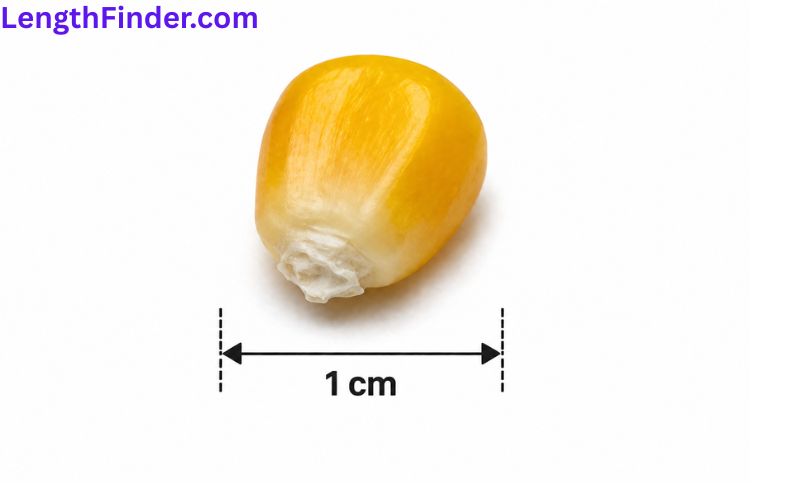
The average corn kernel measures about one centimeter in length. Corn kernels are found in kitchens, farms, and grocery stores, making them familiar examples for many people. Because kernels are small yet easy to see, they help explain metric measurements to children and adults alike. Farmers, food scientists, and agricultural researchers often use centimeters when measuring seeds and crops. Looking closely at a single corn kernel provides another simple reminder of how long one centimeter actually is.
11. A Ladybug
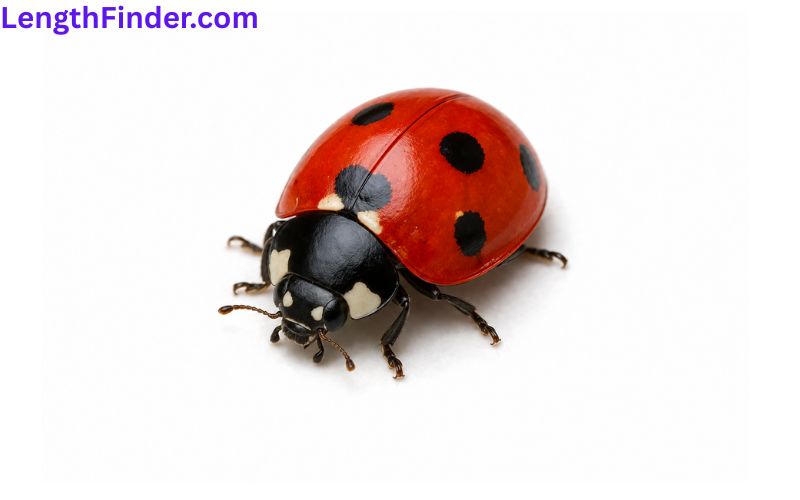
Many common ladybugs are close to one centimeter long. Their bright red shells with black spots make them memorable insects that people often recognize immediately. Since they are frequently seen in gardens and parks, ladybugs provide a natural example of this measurement. Nature lovers and students studying insects can use ladybugs to better understand small metric dimensions. Observing one closely reveals just how tiny one centimeter is while highlighting the incredible detail found in even the smallest creatures.
12. A Cherry Stem
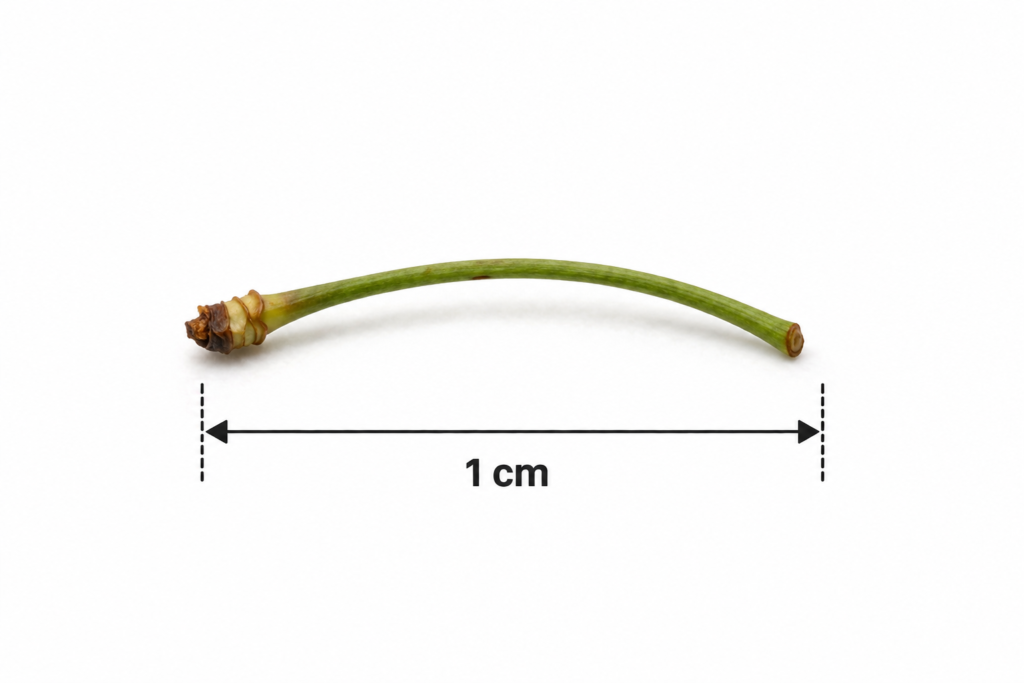
The stem of a fresh cherry often measures around one centimeter in length. While stems vary depending on the fruit variety, many fall close to this measurement. Cherries are widely available during their growing season, making their stems an accessible reference for understanding one centimeter. This comparison also demonstrates how many natural objects share similar dimensions. Gardeners, cooks, and fruit growers frequently work with measurements like centimeters because they offer practical accuracy for small produce.
13. A Standard Staple Width
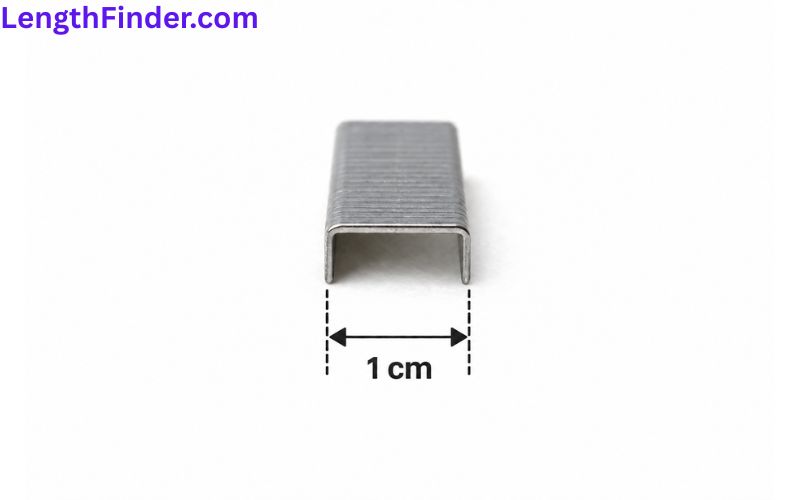
A standard office staple is approximately one centimeter wide before it is bent by a stapler. Although staples are tiny, they are found in nearly every office, classroom, and home workspace. This makes them a surprisingly useful example for visualizing one centimeter. Because staples are manufactured with consistent dimensions, they provide a dependable reference. Office workers may not think about measurements often, but simply looking at an unused staple offers a quick reminder of this common metric length.
14. The Width of a Pinky Fingernail
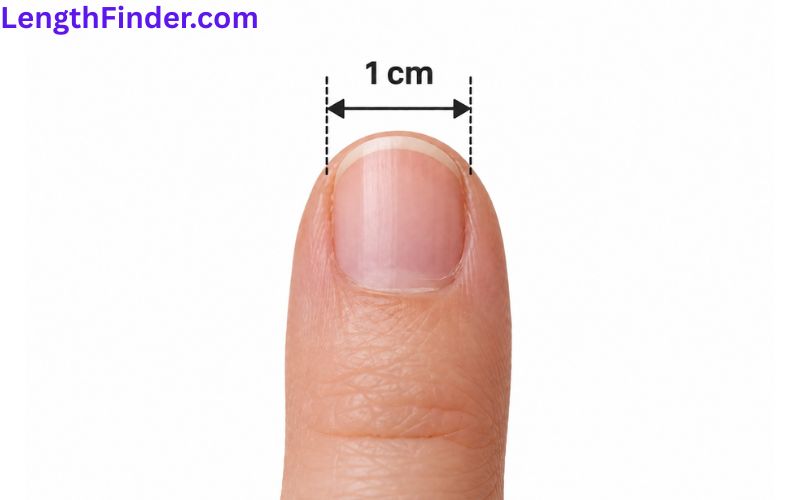
The width of an adult pinky fingernail is often close to one centimeter, although it varies between individuals. This makes another handy body-based measurement when estimating small lengths without tools. Since your hands are always available, using your pinky fingernail can help judge the size of tiny objects while shopping, crafting, or completing home improvement projects. While it should never replace precise measuring equipment, it serves as a practical everyday estimate and reinforces your understanding of how long one centimeter appears.
Related Post:14 Common Things That Are 30 Feet Long?
Frequently Asked Questions
Is 1 centimeter equal to 10 millimeters?
Yes. One centimeter always equals exactly 10 millimeters. This relationship makes converting between the two metric units simple and is commonly used in education, engineering, healthcare, and manufacturing.
Is 1 centimeter bigger than 1 inch?
No. One inch is much larger than one centimeter. In fact, one inch equals approximately 2.54 centimeters, making a centimeter less than half the length of an inch.
How can I estimate 1 centimeter without a ruler?
You can compare it with common objects such as an adult fingernail, a pea, a blueberry, a shirt button, or the width of a standard staple. These everyday items provide convenient visual references.
Why is the centimeter commonly used?
Centimeters are ideal for measuring small everyday objects because they provide a balance between precision and simplicity. They are easier to use than millimeters for many tasks while being more accurate than larger units like meters.
Which professions use centimeters?
Centimeters are widely used by teachers, doctors, architects, designers, engineers, tailors, artists, builders, healthcare professionals, scientists, and many others who need accurate measurements for small objects.
Conclusion
Understanding how long is 1 centimeter becomes much easier when you compare it with familiar everyday objects. Whether you picture the width of a fingernail, a green pea, a blueberry, a shirt button, or a LEGO brick, these examples create a clear mental image of this small but important unit of measurement. Since centimeters are used in education, design, construction, healthcare, and countless daily activities, recognizing their size helps improve estimation skills and measurement accuracy. The next time you need to judge a small object’s size without a ruler, these 14 common examples can serve as reliable visual references.